


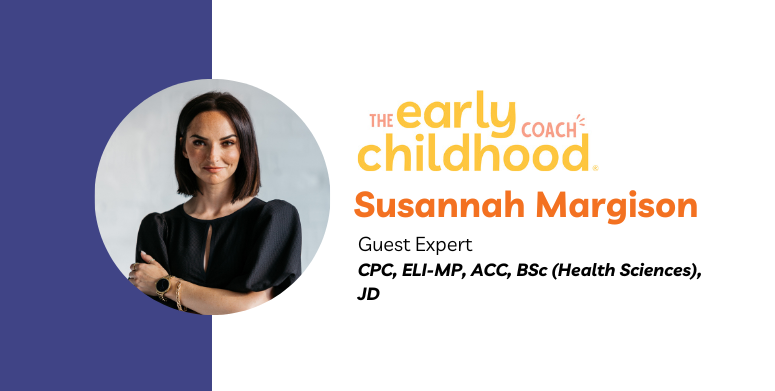
ECE Success Strategies: Move From Conflict to Connection with Susannah Margison
Anisha Grossett • February 29, 2024
Susannah Margison is a conflict strategist, life coach, and lawyer who empowers her clients to overcome conflict and access their ability to level up in a crisis. She offers valuable guidance for early childhood educators and leaders in handling conflict with grace and confidence. Read on for strategies to not only navigate conflict but embrace it as an opportunity for growth and connection.
Tell us about your role and how you help people and companies overcome conflict:
I started my career as a trial lawyer, but the most rewarding moments were when I could set aside the lawyer persona and speak to clients human to human. I decided to focus my work on strategies to prevent problems and respond to conflict more effectively. Instead of fixing an issue and walking away, I wanted to bring people together and address root causes.
Now, I work with individuals and businesses as a conflict strategist and coach. As a coach, I help people work through conflict or manage a crisis. I consult with companies to provide training or meet with individuals or teams experiencing conflict. Sometimes I'll go in and evaluate what's happening in the organization, looking at the big picture and troubleshooting recurring problems. I can help them draft a response to a complaint or evaluate why customers are leaving their company.
Why do people struggle to face conflict in the workplace?
Conflict starts brewing when people are anxious and don't feel safe. Many factors can influence employee experience. One thing I look for is strong leadership. If leadership isn't strong, you'll see conflict among employees. Another issue that creates conflict is categories. When employees are sorted into cliques or different groups, it becomes an us vs. them mentality.
The most significant paradigm shift needed is for people to realize that conflict doesn’t have to be a bad thing.
I would prefer employees talk to their leaders about an issue so it can be investigated and appropriate interventions can be made before it gets out of hand. Problems often arise when there isn't open communication between employees and leadership. Leaders need to let their team know it is safe to communicate openly.
What are your top tips for educators tackling conflict in the classroom?
Conflict is upsetting, and when people get upset, they often jump to conclusions without looking at the complete picture. Educators need to take a moment to understand the full scope of what's happening and determine if more information is necessary to understand the conflict.
Conflict among colleagues can be tricky. Sometimes, you have a person who isn't doing anything wrong on paper, but they bring a negative vibe or energy. Speaking to them gently but directly about the experience they're creating is helpful. Employees who genuinely care about the workplace culture may not even realize that their behavior is affecting other people and will want to do better.
If someone escalates conflict with you, it's essential to ask yourself: Who do I want to be in this moment? What do I want to model for my kids?
You can't change other people, but you can change the energy you bring when you respond to them.
>> Easily overwhelmed by conflict? Try Susannah's Pivot Point Power Hour
for instant relief!
What is the best approach for educators when confronted by frustrated parents or families?
One of the best skills people can learn is acknowledging another person's experience and validating their feelings. If a parent addresses a concern with you, acknowledge their frustration. Thank them for informing you of the issue, and let them know you want to help fix the situation. Re-state their concern and ask, "Did I get that right? Did I leave anything out?"
Bring energy to the conversation that shows them you are safe and want to help. Let them know that anyone in their shoes would feel similarly. Statements like "I want to make sure this doesn't happen again" are helpful and give parents peace of mind that you will work with them to prevent further problems.
If their response seems disproportionate to the situation, keep asking questions. "I want to make sure I'm not missing something. Can you help me understand?" or "I can tell this is important to you, and I just want to get the whole picture." Then, summarize the issue and ask, "Did I get it right? Am I missing anything?" This reiterates that you respect them and care about their feelings and their child.
How can ECE leaders manage conflict more effectively?
The number one piece of advice I give leaders is to change the narrative around conflict. Conflict doesn’t have to be a bad thing! You want to have people in your organization expressing their ideas. You want to have people who disagree with you because none of us have all the answers.
You must have a culture where an employee can come to you and present a different way of thinking about an issue.
Other core components of strong leadership:
- Rules of engagement: Get everybody on the same page. Get employees together once a year or meet regularly to talk about your organization's values and culture.
- Positive rewards: Reinforce positive behaviors as often as possible. Build reward structures for great teammates and people who make the organization a better place.
- Constructive feedback: Strong leaders encourage feedback and create a culture that separates the person from the problem. Let employees know that when you're giving feedback, you're not saying they are a bad employee; you're investing in their growth.
- Transparency: Be as transparent as possible and find common ground with your staff.
- Instill Trust: Employees need to trust your expertise and judgment. Explain the rationale behind your decisions to get everyone on board. Let employees know you respect their feedback.
- Reliability: Do what you say you're going to do. Be clear about your role and how you address conflict. Let your staff know how you'll handle conflict and concerns when they are brought to you.
>> Want to take staff appreciation to the next level?
We have a workshop for that!
We've all experienced individuals who become confrontational with minimal conflict. What's the best way to approach those hard-to-handle employees?
People problems always become profit problems at the end of the day. Childcare centres must have policies in place that prevent bullying and inappropriate behavior because its effects can trickle down and impact children.
If it's a one-time issue where an employee's behavior escalates, be direct and set boundaries. Work with the employee to address the concern and ensure it doesn't happen again. You need to establish clear expectations and address behavior promptly to maintain a positive environment for children.
Notice how an employee responds when you bring up concerns. These are crucial conversations where you should show each other mutual respect and agree on common goals. As a leader you can say, "I value your work here and want to see you succeed. Because of that, I need to bring up this concern with you." If they remain open to working on it, you'll know they are willing to learn and grow. If they respond by blaming others or saying one thing to you but start gossiping among staff later, those are red flags that they may not be a good fit for your organization.
If you notice employees with a consistently negative attitude, they may need motivation through positive reinforcement or tapping into their purpose as an ECE. The ECE world is hard work; it helps when employees feel recognized and find meaning in their work.
Ask educators about their future goals and how you can help support them so they know you are invested in their future success.
>> Rediscover your passion for ECE with one of our most popular workshops:
The Power of Your ECE Story.
Take the first step towards conquering conflict by attending Susannah and Anisha's workshop, where you'll gain practical tools and strategies to navigate conflict effectively and empower yourself and your team.
Reserve your spot before it fills up!

As summer winds down and a new program year approaches, many early childhood educators find themselves making lists, reorganizing materials, labeling bins, and preparing for a new group of students. Don’t get me wrong, all these things are important. They create an environment where children can thrive. But before your students come through the door, it’s worth checking in with yourself. How are you preparing yourself? Remember, it’s a new program year for you too. Yes, preparing the classroom space and materials are important, but you’re just as important to your students’ learning. The relationships we build, the way we respond, and the curiosity we bring shape children’s experience every day. So, let’s invest time in preparing our mindset, intentions and well-being. Reflect Before You Reset: Every new year offers a fresh opportunity to reflect on the previous one. Ask yourself: What brought me the most joy last year? What challenges did I face? What would I like to do differently? Which routines supported children well, and which could be improved? How did I grow as an educator? Reflection isn’t about dwelling on mistakes. It’s about recognizing what you’ve learning and carrying those lessons forward. Small adjustments can still have a big impact. Reconnect with Your “Why” When schedules become busy and paperwork piles up, it’s easy to slip into simply getting through each day. Before the pace picks up, take a moment to reconnect with the reason you chose this profession. This is a grounding exercise and there’s a reason we talk about it often. Perhaps it’s witnessing a child’s excitement when they solve a problem, or it’s supporting families through important milestones, or creating a place where every child feels they belong. Keeping your purpose at the forefront can help guide decisions through the year and provide perspective during more challenging moments. Prepare for Relationships, Not Just Routines The children in your care won’t remember perfectly organized shelves, but they will remember how they felt in your care. The first few weeks are about much more than learning routines. They’re about building trust. So, let’s be intentional. After all, relationships are the foundation of any learning environment. Think about how you will: Welcome families into your program Help children feel safe and connected Create opportunities for every child to experience success Leave Space for Flexibility It’s natural to want to be organized and prepared before the first day. But don’t forget that some of the most meaningful learning experiences happen when we follow children’s curiosity rather than our own agenda. A well-prepared educator is also a flexible educator. Leave room in your plans for unexpected discoveries, spontaneous conversations, and the interests children bring with them. These moments often become the most memorable because you’ve followed the children’s lead. Check In with Yourself The beginning of a new year or having a new group of students often comes with excitement – but it can also bring pressure. As you care for the children, remember to care for yourself. Are you setting realistic expectations? Do you need to have more recovery time the first few weeks of a new routine? What boundaries will help you maintain balance? Reflection on what helps support your personal well-being. Make a list of people you can turn to when you need support, either in the classroom or out of it. Embrace a Learning Mindset Children aren’t the only learners in the classroom. Every new group of students, every family, and every experience is an opportunity for growth professionally. Rather than striving for perfection or the appearance of perfection, make curiosity the priority. A Fresh Start for Everyone The carefully prepared learning environment is important but so is your warmth, your responsiveness, your patience and your willingness to learn alongside the children in your care. This is what truly creates a place where children can thrive. So, before you organize one more bin in the art cabinet or make another label, take a moment to prepare the most important part of your classroom – you. The year ahead won’t be perfect, and it doesn’t need to be. It simply needs an educator who is reflective, present and ready to build meaningful relationships one day, one child, one family at a time. Here’s to a year filled with curiosity, connection, growth and joy – for both the children in your care and for you. We’ll be rooting for you!

As Early Childhood Educators, we enter our classrooms with hearts full of good intentions. We want every child to feel safe, valued, respected, and included. And that matters. Good intentions are often what bring us to this profession. But in Diversity, Equity, and Inclusion (DEI) work, there is an important truth we must embrace: Good intentions do not always lead to positive impact. This does not mean our intentions don't matter. They absolutely do! The research on implicit bias reminds us that even well-intentioned educators can unknowingly make decisions influenced by unconscious assumptions rather than their conscious values. In other words, we can genuinely care about children and families while still unintentionally causing harm (Safir, 2016; Staats, 2015). The goal isn't perfection. The goal is critical reflection. To truly support the children, families, and communities in our care, we must move beyond simply meaning well and intentionally pair our good intentions with reflection, awareness, presence, and action. Understanding Unintentional Harm Most moments of unintentional harm are not rooted in malice. They are often rooted in habit, assumptions, tradition, or simply not knowing what we don't know. Unintentional harm can show up in many ways. Below are three examples educators may encounter in their everyday practice. The definitions are informed by the Canadian Centre for Diversity and Inclusion's (CCDI) Glossary of DEIA Terms , an excellent resource for anyone looking to deepen their understanding of inclusive language and practice.