
Building Futures: The Lasting Legacy of Early Childhood Educators
Anisha Grossett • October 1, 2024
As we celebrate Early Childhood Educator (ECE) Appreciation Day/Month, it’s the perfect time to reflect on the incredible contributions of early childhood professionals. Beyond the daily routines, lessons, and activities, early childhood educators leave a lasting legacy that shapes the future. Here’s how ECEs can ensure their work creates a meaningful and enduring impact.

The Importance of Legacy in Early Childhood Education

Leaving a legacy means creating a lasting impact that benefits others even after you have moved on. This legacy is seen in the positive experiences, knowledge, and values imparted to young children in early childhood education. It is about making a difference in the lives of children, families, and the community, influencing educational practices, and advancing the field.

Building Strong Relationships


With Children:


Nurturing Growth: Every moment you spend nurturing a child’s growth, curiosity, and creativity contributes to their long-term development. Your encouragement and support help children develop a love for learning and self-confidence that stays with them throughout their lives.


Emotional Support: Providing a safe and loving environment helps children develop emotional intelligence and resilience. Your kindness and patience teach them empathy, cooperation, and problem-solving skills.



With Families:


Partnerships: By building strong partnerships with families, you help create a supportive network that enhances a child's learning experience. Sharing insights, resources, and strategies with parents and caregivers fosters a cohesive approach to education and development.


Empowerment: Educating families about early childhood development empowers them to support their child's growth at home. Your guidance and expertise give parents the tools to nurture their child's potential.


With the Community:


Advocacy: As an advocate for early childhood education, you play a crucial role in raising awareness about its importance. Your voice helps shape policies, secure funding, and create programs that benefit young children and their families.

Collaboration: Working with community organizations, schools, and other stakeholders strengthens the support network for children. Collaborative efforts ensure every child has access to quality early education and resources.


Collaboration: Working with community organizations, schools, and other stakeholders strengthens the support network for children. Collaborative efforts ensure every child has access to quality early education and resources.

Professional Development and Lifelong Learning

Continuous Improvement: Staying current with the latest research, best practices, and innovations in early childhood education enhances your teaching and ensures you provide the best possible experience for your students.


Mentorship: Sharing your knowledge and experiences with new educators helps cultivate the next generation of early childhood professionals. Your mentorship can inspire and guide them to continue the vital work you’ve started.

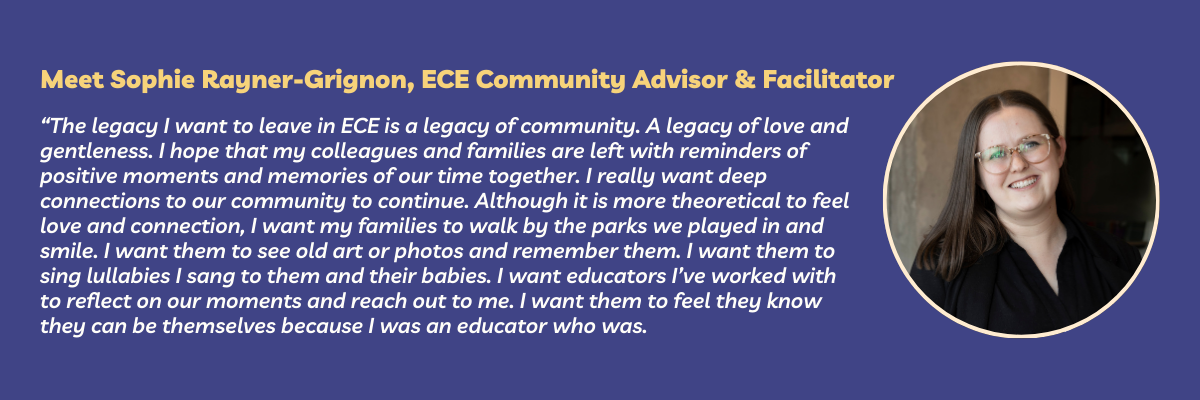
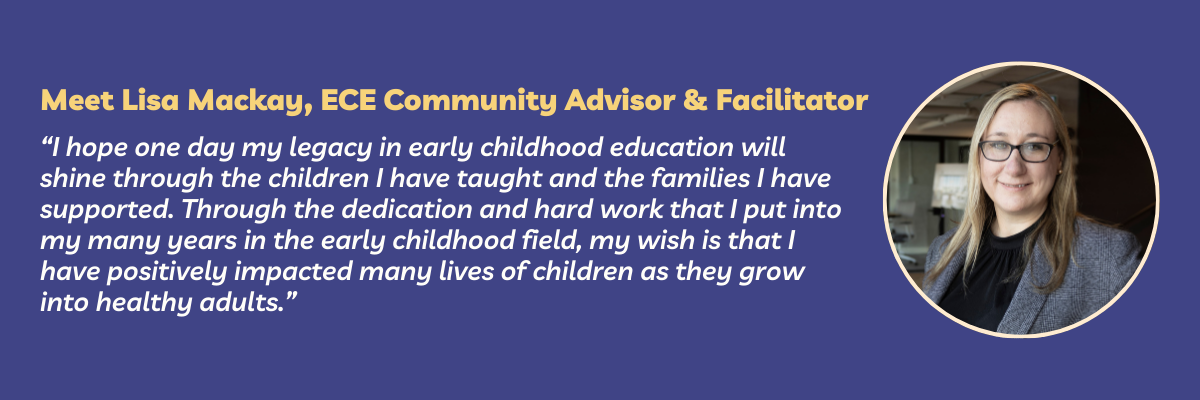
Our ECE Advisors on Their Legacy

We asked some of our team of ECE advisors to share what they believe their legacy is. Here’s what they had to say:
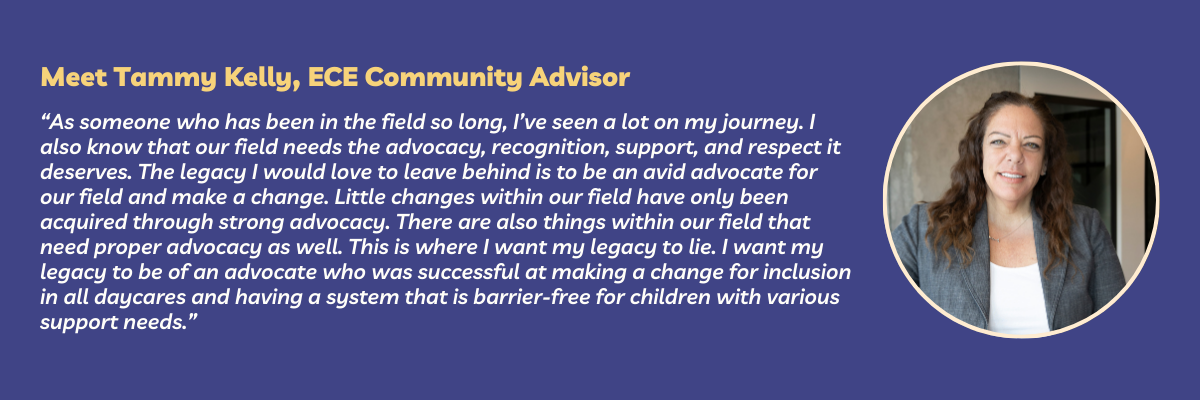
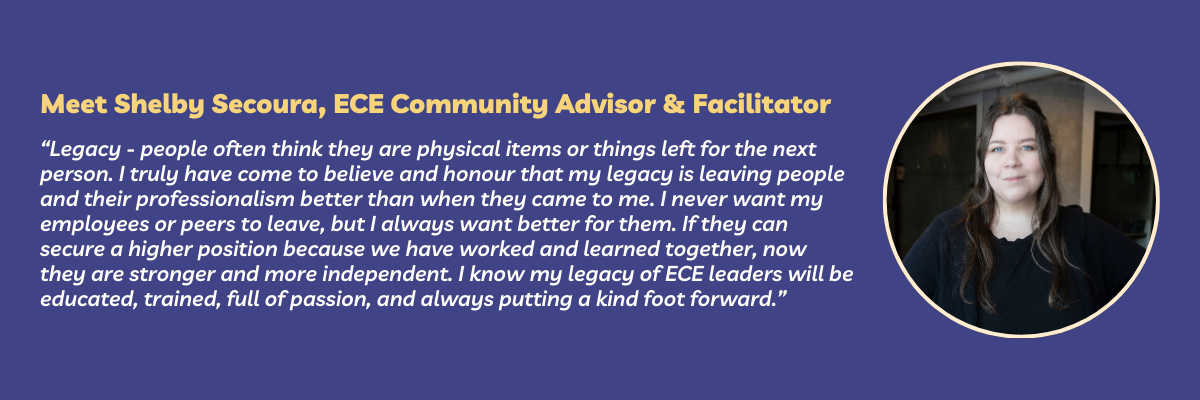
As we honour early childhood educators during ECE Appreciation Day/Month, let’s celebrate the incredible legacy you are creating. Your dedication, passion, and commitment to nurturing young minds leave an indelible mark on the world. Thank you for all you do to shape the future, one child at a time.


>>>>> Are you looking for a keynote or workshop for your ECE community that is all about leaving a legacy in ECE? Check out Anisha’s session called “Inspiring Generations: Cultivating Your Legacy in Early Childhood”  (Page 9)

The ECC - Workshops & Webinars Brochure.pdf - Google Drive <<<<<<<<


Join us in celebrating ECE Appreciation Day/Month by sharing your stories, expressing gratitude to the educators in your life, and advocating for the importance of early childhood education. Let’s work together to ensure that the legacy of early childhood educators continues to shine brightly for generations to come.


By Anisha Grossett November 28, 2025
December has a way of sneaking up on us, doesn’t it? One moment, we’re kicking off a new year with fresh goals, and the next, we’re knee-deep in holiday plans, wrapping up projects, and trying to catch our breath. For early childhood educators and leaders, this time of year can feel especially heavy — the final push before the holidays often comes with its own mix of joy, exhaustion, and reflection. But here’s the truth: the end of the year is not just a closing chapter. It’s an invitation — to pause, to rest, and to prepare ourselves for what’s to come. This December, let’s shift the focus from “finishing strong” to “resting strong.” Because when you rest well, you’re not stepping back — you’re stepping into the new year with clarity, energy, and purpose.
By Anisha Grossett October 31, 2025
In early childhood education, we often talk about nurturing growth. But how often do we create the same nurturing environment for our own professional development? Whether you're an educator wondering what’s next or a childcare owner thinking about how to keep your best staff, one truth remains: career growth in ECE doesn’t follow a single, straight path. It’s dynamic. It’s personal. And it should be intentional. It’s time to explore the many ways early childhood professionals can move forward — not just up — in their careers.
By Anisha Grossett September 30, 2025
Becoming a leader in Early Childhood Education (ECE) is an exciting yet challenging transition. Whether you're stepping into a leadership role for the first time or moving up within a company you've been a part of, this journey requires new skills, a fresh mindset, and a commitment to growth. Leadership in ECE goes beyond management — it’s about fostering relationships, guiding educators, and creating a thriving learning environment for children and staff alike. Essential Tips for New ECE Leaders & Supervisors 1. Embrace Active Listening Leadership isn’t just about giving instructions — it’s about truly hearing and understanding your team. Actively listen to educators, parents, and children to build trust and show that their voices matter. 2. Build Strong Relationships Strong leadership is rooted in strong relationships. Take time to connect with your team on a personal level, understand their strengths, and foster a culture of collaboration and respect. 3. Lead by Example Your team will look to you as a role model. Show professionalism, positivity, and a willingness to learn, and your team will follow suit. 4. Communicate Clearly and Consistently Clarity in communication helps prevent misunderstandings and ensures that expectations are met. Be open, transparent, and available for discussions. 5. Stay Open to Feedback Leadership is a continuous learning process. Invite and accept feedback with an open mind, and use it to refine your approach. 6. Prioritize Professional Development As an ECE leader, ongoing learning is key. Engage in training sessions, read leadership books, and seek mentorship to continue growing in your role.
By Anisha Grossett August 29, 2025
Conflict is an inevitable part of any human relationship — and in the dynamic, emotionally rich environment of early childhood education, it can arise in many forms. Whether you’re leading a team or working directly with children and families, knowing how to approach conflict with confidence, empathy, and clarity is a key part of thriving in this field. At The Early Childhood Coach, we believe that conflict doesn’t have to be destructive — it can actually be a catalyst for growth, stronger relationships, and positive change. Let’s explore the different types of conflict you may encounter, and how you can manage them with intention and leadership.
By Anisha Grossett August 1, 2025
In today’s fast-evolving world of early childhood education, professional development can no longer be a one-time event or an annual checkbox. The most innovative organizations are embracing a new model of learning — one that’s flexible, sustainable, and embedded into the culture of their team. Enter: the Learning Management System (LMS) and the rise of in-house training ecosystems. 🌍 The Shift to Ongoing, Accessible Learning A Learning Management System (LMS) is a digital platform used to deliver, track, and manage training and education. Think of it as a virtual hub where your team can access workshops, modules, videos, and interactive learning activities — all at their own pace. More than a trend, LMS platforms are becoming an essential tool for childcare organizations that want to stay aligned with licensing requirements, increase staff engagement, and reduce onboarding time for new educators. But even more importantly, they empower staff to grow in real time — with content tailored to their daily realities. 
By Anisha Grossett June 30, 2025
Welcoming new Early Childhood Educators (ECEs) and staff into your center is more than just handing them a policy manual and showing them the breakroom. A strong, innovative onboarding process sets the foundation for their success, increases retention, and fosters a positive workplace culture. Yet, research shows that onboarding remains a challenge in many early childhood settings. The Challenge of Onboarding in Early Childhood Education A 2022 report from the Society for Human Resource Management (SHRM) found that nearly 30% of new employees leave a job within the first 90 days, with lack of proper onboarding and insufficient mentorship being key reasons. In early childhood education, this is especially concerning, as new hires must quickly adapt to a fast-paced environment while learning center policies, child development best practices, and team collaboration strategies. Traditional onboarding methods often focus on paperwork and compliance, missing the opportunity to engage new educators in meaningful ways. To combat high turnover and ensure new hires feel supported, early childhood leaders must embrace innovative and unconventional onboarding strategies that foster connection, growth, and a sense of belonging from the start.
By Anisha Grossett May 30, 2025
As educators working with infants, one of the most important tools in our communication tool box is our voices! Lalalalaaaaaa! Our voices are dynamic and powerful tools used for many things including singing, laughing, advocating, and so much more. One of these these amazing and scientifically proven ways to use our voices is child-directed speech, also known as parentese or as I like to call it - Educatorese 😉! Sometimes mistaken for “baby talk”, child-directed speech plays a critical role in how infants and toddlers learn (and enjoy) language. In this blog post, we will dive into the science of child directed speech, some practical ways to incorporate it effectively into childcare connections, and reflect on how you use your voice with babies!
By Anisha Grossett April 29, 2025
“The environment is the third teacher.” This phrase is one I’ve heard often throughout my career in early childhood education. Rooted in the Reggio Emilia approach, it emphasizes the environment as an intentional and purposeful extension of learning. I’ve wholeheartedly embraced this philosophy in my own classrooms, recognizing that a well-designed environment is more than just a space—it’s an active teaching experience and a direct reflection of a program’s values. Have you ever taken a step back to observe how children interact with their surroundings? Watching how they explore, navigate, and engage with their environment can be incredibly insightful. As educators, it’s our role to create a space that fosters curiosity, collaboration, and meaningful learning opportunities. A thoughtfully designed classroom should: ✔ Have a natural flow that supports exploration and learning. ✔ Reflect children’s interests and showcase evidence of their growth. ✔ Provide opportunities for investigation, creativity, and problem-solving. ✔ Serve as a tool for classroom management by promoting engagement and minimizing disruptions. For example, we know children love to run. Structuring the classroom layout with intentional furniture placement can help prevent open running paths while still allowing movement and engagement. A well-planned space should feel inviting, safe, and supportive while fostering a sense of belonging for every child.
By Anisha Grossett March 18, 2025
As educators, we know the environment we create plays a vital role in shaping the learning experiences of children. A well-organized, thoughtfully designed classroom sets the stage for creativity, exploration, and growth—all while promoting positive behavior and independence. Whether you're setting up your classroom for the first time or giving it a mid-year refresh, these actionable tips will help you create a welcoming, functional, and inspiring space for success.
By Anisha Grossett February 28, 2025
It was a typical morning in the classroom. The hum of busy little hands and curious minds filled the air. Maya, an Early Childhood Educator (ECE), glanced around, her heart swelling with pride. It was moments like these—when a child’s eyes lit up with understanding or when a shy toddler found the courage to join a group—that reminded her why she chose this path. Yet, deep down, Maya often wondered: Am I really a leader? Perhaps you, too, have asked yourself the same question. The word "leader" may bring to mind images of CEOs in boardrooms or heads of organizations rallying teams. But let’s shift that perspective. Leadership isn’t about titles; it’s about influence, impact, and the way you inspire those around you—adults and children alike. As an ECE, you are already a leader. The question is, how can you activate your leadership fully? Let’s take a journey together, exploring how to unlock the leader within. Because here’s the truth: Every ECE is a leader in early childhood education.