


Risky Play the Right Way

Move over trips and falls and organized sports, we have a new injury inducer in town for our children and it’s starting to raise some heated debates. When we look at what’s happening with the injuries we see with children today, it’s not the same from when I was a child. I was falling out of trees, cuts and scrapes on knees and elbows from going too fast around a corner or down a hill on my bike. I was learning physics in the hands-on experiential way, so that when I was a 16 year old driving my dad’s pickup truck, I was already familiar with sliding tires and changing road conditions. I took the lessons I learned going over the handlebars and the feelings of losing control and used them to become more aware and resilient during stressful situations as I grew older into adulthood.
I recently read an article online talking about emergency room injuries with children in British Columbia and the number one culprit on the list comes from E-scooter accidents. I definitely have my opinions on these scooters, but we’re not gonna dive into that one today. I want to tell you how easily these injuries can be prevented with a little bit of background education, situational awareness, and some foundational motor development. A lot of these children likely missed the opportunity of learning how to ride a bike properly, they don’t have the vestibular development and appropriate proprioceptive skills to get their balance and their coordination correctly on a scooter. If they never learned the mechanics of how to ride a bike, then how do they know that when they go around that sharp turn and hit a little bit of loose gravel that the back end might slide out a little bit. These foundational fine and gross motor skills are imperative for children to use these conveyances safely, not to mention the spatial awareness needed to navigate the world around them while travelling at high speeds. Parents often send their children out on these scooters without helmets, further exacerbating the risk level. Scooters pose a much higher risk than a traditional bike because you don't need to invest the same amount of time learning to “ride” it. The physics and mechanical lessons I learned as a child are often missed in this day and age and it’s showing up in our emergency rooms across the country.
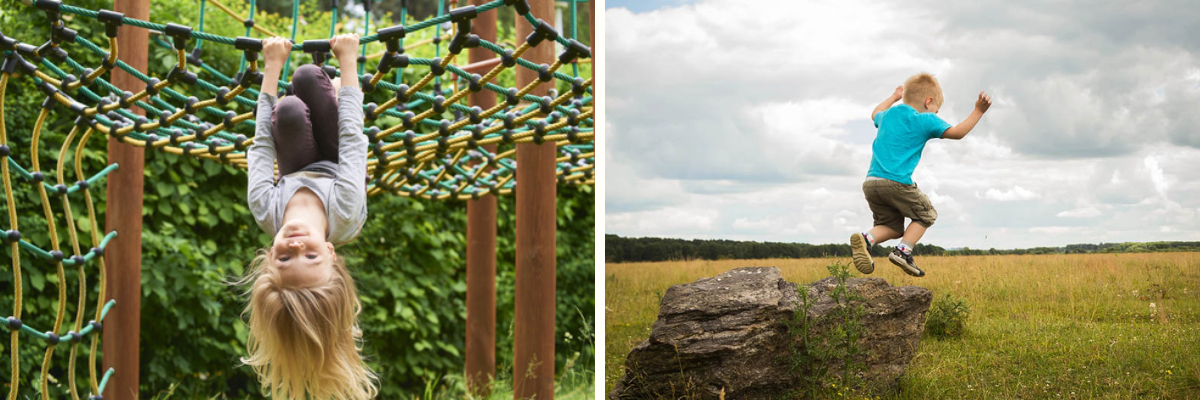
When I grew up, I don’t remember any of the injuries I got playing outside in nature, climbing trees, traversing rocks and boulders on the beaches and just general exploration through backyards forests. If they happened and I’m confident they did, I would have used them as sensory experiences and lessons learned to carry forward in my development. Minor cuts and scrapes taught me resilience, taught me to take my time and think ahead, and the list goes on. I only remember the injuries that I got playing organized sports like ice hockey, I can still see the scars and count all the stitches, and I remember each broken bone. It’s funny though when we look at societies' risk perceptions. We play a game like ice hockey that has so much structure, rules and protective equipment, our brains think it’s safe because we followed all the checks and balances, signed up through a governing body and paid your participation fees.
Unfortunately that’s a false narrative, we are quick to think it’s fully safe with a helmet and pads involved, but the risks are still there. We choose to ignore those risks for a number of reasons and societal pressures, but those same influences prevent us from safely engaging in risky play opportunities because a safety checklist isn’t available outdoors. We roll up to the tube and steal playgrounds and see a list of things you can’t do. We live in a prescriptive society where we stress that we need to make things as safe as humanly possible, but that’s not an achievable goal. Make it as safe as needed, allow some wiggle room to make mistakes and learn some life lessons. Children need to be ok seeing a bandaid go over a little scrape on their knee, and when you get to that point, the tears won’t come when the bandaid comes off, and the lesson learned will have left its mark.