


From Behaviour to Belonging: Reimagining Classroom Design in Early Learning
The classroom is more than a place we work — it is a second home for both educators and the children who spend their days within it. Because of this, how our environment is designed matters deeply. Children are constantly communicating with us through their behaviour, movement, and engagement with the space. When we pause to observe what children’s actions are telling us, the environment shifts from being a pain point to becoming the third teacher.
What messages does our classroom environment send to children the moment they enter the space?
Listening to children when placing furniture and designing play areas is more than an act of respect — it reflects our belief that children are competent and capable learners. It acknowledges that children are active participants in their learning, not simply occupants of a room. When the environment truly meets children’s needs, we often see calmer bodies, deeper engagement, and more meaningful play.
How often do we adjust the environment based on children’s cues rather than adult convenience?
So, what areas within a classroom should be considered non-negotiable because they support regulation, development, and a sense of safety?
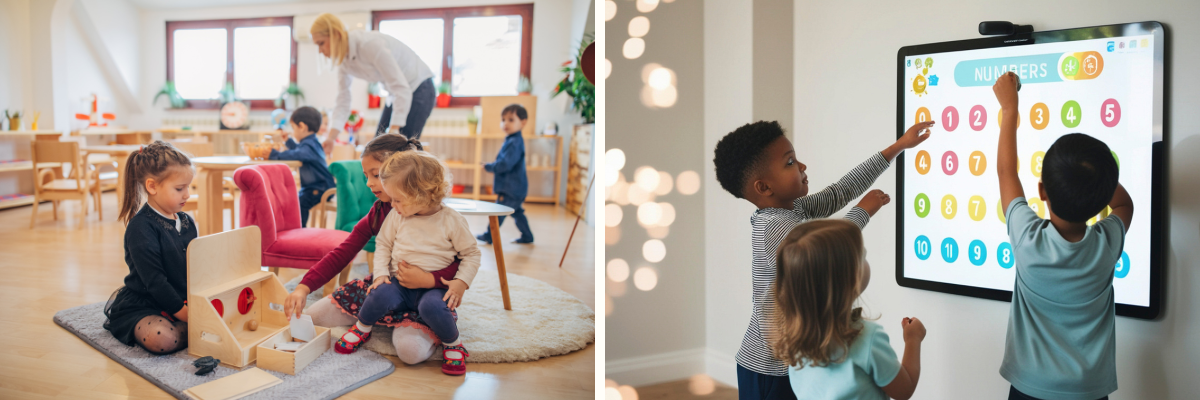
Sensory Area
A sensory area should always be present and intentionally planned. A sensory bin is essential and should be refreshed regularly — ideally weekly. Options may include rocks or pebbles, lightweight machine parts with no small pieces, or seasonal natural materials collected with the children.
Do children have daily access to sensory materials that support regulation, not just exploration?
Hideaway Space
Children benefit from having access to an enclosed, cozy space where they can retreat when they need comfort or reduced stimulation. This might look like a blanket fort, a tent, or a cozy cube with soft materials layered over it.
Is there a space in our classroom where children can choose privacy or calm without needing permission?
Gross Motor Area
This is a larger, open space that offers children “yes” space for big body movement — climbing, pushing, jumping, and stretching. Gross motor opportunities support regulation, coordination, and emotional release.
Are children given enough opportunity to release energy indoors, or are we often asking them to “slow down”?
Quiet Area
A calm, cozy space for reading, resting, or taking a break from stimulation allows children to self-regulate and recharge.
Does our quiet area invite rest and comfort, or is it treated as a time-out space?
These spaces allow children to choose what their bodies need in the moment — movement, calm, or sensory input — helping to reduce frustration and support self-regulation.
Children’s behaviour often reflects the environment they are navigating. Before labeling behaviour as “challenging,” it is important to pause and consider what the classroom might be communicating to the child.
- An increase in accident reports, frequent running, crashing, or rough play may indicate a need for more gross motor opportunities.
- Avoidance behaviours, withdrawal, or disengagement from peers, educators, or activities may suggest the environment feels overwhelming or lacks predictability.
- Heightened emotions during transitions may point to unclear layouts, crowding, unmet sensory needs, or unclear expectations.
What behaviours are we seeing most often, and what might they be telling us about our environment?
When we shift our lens from managing behaviour to understanding it, we open the door to meaningful and lasting change.
Designing responsive classrooms is an ongoing process — one that requires reflection, collaboration, and flexibility. Small environmental adjustments can have a significant impact on children’s sense of belonging, regulation, and confidence.
How Does Learning Happen? (p. 66) reminds us:
“The focus is not on teaching a body of knowledge or a predetermined set of topics… programs are most effective when the context of learning is focused on supporting the development of strategies, dispositions, and skills for lifelong learning through play and inquiry.”
Are we prioritizing children’s learning processes over outcomes in our daily environment decisions?
Children’s communication can feel exhausting — especially when it shows up through big behaviours. Knowing this, we are encouraged to look closely at the environment and create as many “yes” spaces as possible.
Where can we replace a “no” with a safe, intentional “yes”?
Giving children “yes” spaces allows them to take ownership of their learning. These moments support cause-and-effect thinking, problem solving, critical thinking, turn-taking, and a sense of belonging.
These children are not simply passing through our classrooms. They deserve to feel that this space belongs to them.
So say yes to sensory play.
Say yes to art on the walls.
Say yes to choice, curiosity, and collaboration.
Say yes to children — through your words, your interactions, and the way you design your classroom environment.