
Enhance Literacy in the ECE Classroom with Melissa Gagnon

Anisha Grossett • October 31, 2023

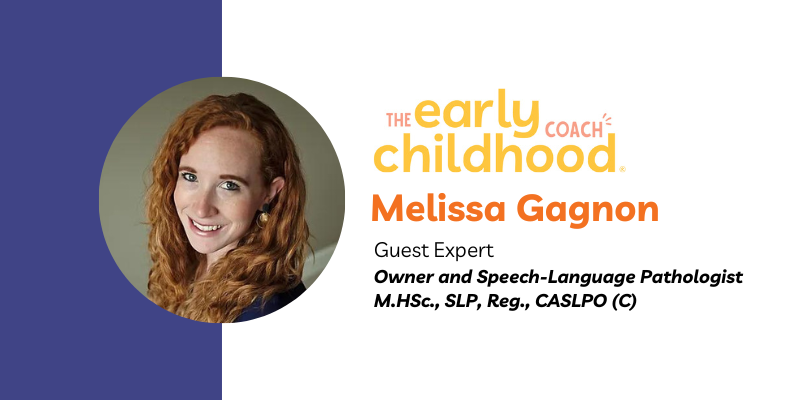
Meet Melissa Gagnon, a certified Speech-Language Pathologist (SLP) with over a decade of experience working with kids and adults. We sat down with Melissa, and she wowed us with insights on early interventions that support lifelong literacy. Read on for simple strategies you can implement right away to make an impact on early literacy in ECE. 


Tell us all about you and the work you do to support literacy.

My current work focuses on literacy in children, which is very much tied to speech and language development. About halfway into my SLP career, I noticed that kids with speech and/or language delays often struggled with reading and there were few options available for supporting these children. It was due to this gap that I decided to pursue continuing education and began to realize just how much speech, language, and literacy are connected. I wanted to learn more about the science of reading and how I could support kids on their journey to become successful readers through research-based therapy. Children struggling with literacy needed extra support, and parents often struggled to figure out why they were falling behind. They would tend to question their child’s abilities and invest in tutors and/or other services, not necessarily how literacy was being taught.


What drives your passion for enhancing literacy?

I struggled as a young reader myself, so I relate to kids who struggle a lot with reading. It was difficult being a poor reader, as this affected other areas of my life, such as social interactions. We know literacy is deeply connected to academics and quality of life, and literacy rates in Canada are dropping. This is a problem because literacy is a part of everyday life, and a certain level of literacy is required to complete tasks of daily living. There are five literacy levels, with level three being the bare minimum of proficiency. Research has shown that increasing literacy rates by 1% in Canada would create an $18 billion/year increase in the GDP (Gross Domestic Product). Literacy has a lifelong impact on quality of life, which is why I'm so passionate about it. 


>> Learn more about Melissa’s early struggles with reading and her journey to supporting literacy on her blog.  


What should every ECE know about literacy in the early years?

One of the biggest misconceptions is that literacy is learned in the same way as language. Most people believe we just need to expose kids to words and letters and read to them until they eventually pick it up. We now know that is not the case. Reading is not learned through exposure; it requires different areas of the brain to make connections. We must establish those neural pathways through an explicit and direct teaching approach. In fact, did you know that 95% of students can learn to read when taught using instruction and programs based on the science of reading? Only 30% of students will learn how to read without any instruction (through exposure only).


In your work, what are some things you see happening that need to be addressed in the early years?

When most people think of literacy, they think of teaching kids the ABCs. But that is just one core component of literacy (phonics). There are five core components of literacy: phonics, phonological awareness, fluency, comprehension, and vocabulary. 


Phonics is fantastic, but we focus a lot of energy on that, and we don't necessarily do it correctly. Letter sounds, not letter names, are the most important aspect of phonics. This includes teaching all 44 sounds of the English language, not just the 26 sounds of the alphabet. Using lowercase letters is also important because kids are exposed to them more frequently. Phonics is also best learned through a multisensory approach. 


Many people are not familiar with the term, but phonological awareness is the most significant predictor of a child's literacy success down the road. It is the ability to understand and recognize sounds and to manipulate them through rhyming, blending, segmenting, and substitution.


The good news is that you can work on phonological awareness skills with children as early as three years old; this may even be before they know letter names and sounds. For example, if you are on a walk with your kids, you can play 'I Spy' and say, "I spy a 'c' 'aa' 't,' slowly sounding out each letter sound, and ask them to blend these sounds into a word to determine what you see (cat). It's a fun detective game for kids, and it teaches them how to blend sounds. There are many other activities that you can do in a child’s everyday life to help build the foundation of literacy as well!


What makes a "literacy-rich" classroom or learning environment?

Focusing on phonological awareness is a powerful way to support early literacy. You can incorporate almost all the phonological awareness skills when reading books in the classroom. Let's say I'm reading a book about a farm. If there is a sheep on the first page, before I show them the picture, I can say, "Ok, I see an animal and I want you to listen to these sounds and guess what it is: 'sh' 'ee' 'p.' Who knows what animal it is?" Then let them guess the animal by blending the sounds together to make a word. I can work on rhyme production, which is another part of phonological awareness, by asking, "Can anyone tell me a word that rhymes with sheep?" If they're stumped, we can work on rhyme identification. "Do sheep and meep rhyme? What about sheep and keep?" We could take this one step further and work on sound manipulation by asking the students, “What new word would I get if I removed the ‘sh’ sound at the beginning of ‘sheep’ and added a ‘p’ sound?” With one activity, you can cover all the aspects of phonological awareness. 


Literacy is very visual, meaning it requires a child to picture the number of sounds in words and what happens when we change those sounds. The great thing about this is that we can work on literacy skills without requiring children to sit down at a desk with words, a book, and/or pen and paper.


>> Enhance your classroom library with Zoey has an Allergy, a children’s book written by The ECC’s founder Anisha Angella!
What should literacy look like for children at two years old? Three years? And four to five years?


It's challenging to assess literacy at young ages as children are just starting to explore books. They will start to understand which way you hold a book, that you read from left to right, the difference between a word and a picture, etc. It is mostly about exposure at age two and modeling early literacy skills, such as phonological awareness. At age three, if they're struggling with putting sounds together or holding the book the wrong way or upside down, we want to keep an eye on that.


For ages three and four, I'd expect them to start to identify their name and begin to spell their name, maybe not pen to paper, but being able to find tiles with the letters for their name or write their name in sand or dough, which also incorporates fine motor movement.


Ages four and five are at that sweet spot for learning literacy. If we can work on blending, segmenting, playing with sounds, and making it fun instead of using traditional flash cards and ABCs, we can support skills they'll need when they're ready to read. This is also a great age to introduce new vocabulary, which will help support a child’s ability to become a fluent reader who comprehends the information they are reading.


What resources would you recommend to the ECE community to learn more about literacy?

There's a great podcast called Sold a Story that shares why kids are struggling with literacy. It examines the Balanced Literacy programs widely used in the education system and the problems it creates in early readers. It is a phenomenal podcast for educators and parents alike. 


I also encourage educators to pursue continuing education or to gather more information about literacy. Make sure you find resources based on the science of reading. When you look for something to implement in the classroom, you want to make sure it's going to help the majority of students. Balanced Literacy programs only help a small percentage of the population. 


If you want to make sure you're providing the best support for young students, take a workshop! I lead an ECE workshop that teaches a research-based approach to literacy and will include resources, education, and a live Q&A. We created this workshop to equip educators with all these wonderful resources and ideas for supporting early literacy in the classroom. 


Melissa has so many amazing strategies for supporting literacy that we couldn't fit them all in! Check out her work at Empower Communication Services and be sure to follow her on Instagram for regular updates and insights on all things literacy.

 

By Anisha Grossett • September 25, 2026
Why ECE Appreciation Starts With Connection Every day, early childhood educators shape the future. Through comforting hugs, meaningful conversations, learning experiences, advocacy, creativity, and care, ECE professionals help children build confidence, belonging, identity, and lifelong foundations for learning. Yet behind the incredible work happening in classrooms, programs, and communities, many educators still experience something that often goes unspoken: isolation. That’s why community matters. As we celebrate Early Childhood Educators' Day and ECE Appreciation, we believe this is more than a moment to recognize educators for what they do — it’s also a time to reflect on how we support them while they do it. Because educators deserve community too. Community Changes Everything In early childhood education, community is powerful. It reminds educators they are not alone in their challenges, ideas, dreams, or experiences. It creates spaces where professionals can collaborate, grow, ask questions, feel seen, and be inspired by one another. Strong communities in ECE can: Reduce feelings of burnout and isolation Encourage innovation and leadership Create opportunities for mentorship and collaboration Support educator wellness and confidence Help professionals feel valued and understood Build stronger programs and stronger outcomes for children and families When educators feel connected, supported, and empowered, entire communities benefit. And the truth is — many educators are looking for more than professional development. They are looking for belonging. The Importance of Finding Your Community Not every community looks the same. For some educators, community is a team within their centre. For others, it’s a mentor, an online network, a professional membership, or a safe space where they can openly discuss the realities of the field. Finding your community means finding people who: Understand the work you do Celebrate your wins Support you through challenges Encourage your growth Inspire you to lead, create, and advocate Community reminds us that we don’t have to navigate this field alone. As educators, leaders, entrepreneurs, and advocates, we grow stronger when we grow together. What Does It Mean to Be a Community Member? Being part of a community is not just about joining a group — it’s about contributing to a culture of support, encouragement, and connection. Great community members: Show up authentically Share ideas and resources Encourage others Listen with empathy Celebrate fellow educators Stay open to learning Create welcoming spaces for others You don’t need a title to make an impact in your community. Sometimes leadership looks like: Checking in on another educator Sharing a helpful resource Encouraging someone who feels discouraged Starting meaningful conversations Creating spaces where others feel included Leadership in ECE begins with connection. Building the Future of Community in ECE At The Early Childhood Coach, we have always believed that educators deserve more than occasional inspiration — they deserve ongoing connection, collaboration, and support. That belief is exactly why we are building the ECC Community Hub. The ECC Community Hub is being designed as a space where early childhood professionals can: Connect with like-minded educators Access professional growth opportunities Join meaningful conversations Build relationships and collaborations Feel supported in both life and career Grow as educators, entrepreneurs, and leaders More than anything, we want this to feel like a true community built for the ECE field. A place where educators can feel empowered, inspired, connected, and celebrated. Reflective Questions for Educators Take a moment to reflect on your own journey within the ECE community: What does community mean to you as an educator? When have you felt the most supported in this field? What kind of community are you currently looking for? How do you currently contribute to the ECE community around you? What would change if you felt more connected professionally and personally? In what ways can you become a stronger community leader? How can you help create spaces where others feel welcomed and valued? What kind of impact do you want to have within the ECE field? You Belong Here ECE Appreciation is not only about recognizing the work educators do. It’s about reminding educators that they matter too. Your voice matters. Your experiences matter. Your leadership matters. And you deserve to be part of a community that pours back into you. As we continue building spaces for connection within the field, we invite you to grow with us. Learn more about the ECC Community Hub Explore the ECC Community Hub here !
By Anisha Grossett • August 19, 2026
As summer winds down and a new program year approaches, many early childhood educators find themselves making lists, reorganizing materials, labeling bins, and preparing for a new group of students. Don’t get me wrong, all these things are important. They create an environment where children can thrive. But before your students come through the door, it’s worth checking in with yourself. How are you preparing yourself? Remember, it’s a new program year for you too. Yes, preparing the classroom space and materials are important, but you’re just as important to your students’ learning. The relationships we build, the way we respond, and the curiosity we bring shape children’s experience every day. So, let’s invest time in preparing our mindset, intentions and well-being. Reflect Before You Reset: Every new year offers a fresh opportunity to reflect on the previous one. Ask yourself: What brought me the most joy last year? What challenges did I face? What would I like to do differently? Which routines supported children well, and which could be improved? How did I grow as an educator? Reflection isn’t about dwelling on mistakes. It’s about recognizing what you’ve learning and carrying those lessons forward. Small adjustments can still have a big impact. Reconnect with Your “Why” When schedules become busy and paperwork piles up, it’s easy to slip into simply getting through each day. Before the pace picks up, take a moment to reconnect with the reason you chose this profession. This is a grounding exercise and there’s a reason we talk about it often. Perhaps it’s witnessing a child’s excitement when they solve a problem, or it’s supporting families through important milestones, or creating a place where every child feels they belong. Keeping your purpose at the forefront can help guide decisions through the year and provide perspective during more challenging moments. Prepare for Relationships, Not Just Routines The children in your care won’t remember perfectly organized shelves, but they will remember how they felt in your care. The first few weeks are about much more than learning routines. They’re about building trust. So, let’s be intentional. After all, relationships are the foundation of any learning environment. Think about how you will: Welcome families into your program Help children feel safe and connected Create opportunities for every child to experience success Leave Space for Flexibility It’s natural to want to be organized and prepared before the first day. But don’t forget that some of the most meaningful learning experiences happen when we follow children’s curiosity rather than our own agenda. A well-prepared educator is also a flexible educator. Leave room in your plans for unexpected discoveries, spontaneous conversations, and the interests children bring with them. These moments often become the most memorable because you’ve followed the children’s lead. Check In with Yourself The beginning of a new year or having a new group of students often comes with excitement – but it can also bring pressure. As you care for the children, remember to care for yourself. Are you setting realistic expectations? Do you need to have more recovery time the first few weeks of a new routine? What boundaries will help you maintain balance? Reflection on what helps support your personal well-being. Make a list of people you can turn to when you need support, either in the classroom or out of it. Embrace a Learning Mindset Children aren’t the only learners in the classroom. Every new group of students, every family, and every experience is an opportunity for growth professionally. Rather than striving for perfection or the appearance of perfection, make curiosity the priority. A Fresh Start for Everyone The carefully prepared learning environment is important but so is your warmth, your responsiveness, your patience and your willingness to learn alongside the children in your care. This is what truly creates a place where children can thrive. So, before you organize one more bin in the art cabinet or make another label, take a moment to prepare the most important part of your classroom – you. The year ahead won’t be perfect, and it doesn’t need to be. It simply needs an educator who is reflective, present and ready to build meaningful relationships one day, one child, one family at a time. Here’s to a year filled with curiosity, connection, growth and joy – for both the children in your care and for you. We’ll be rooting for you!